
Tippecanoe County Traffic Warrants Explained
Traffic cases in Tippecanoe County are court matters. The county's traffic page sets one deadline early: payment on a payable ticket is due before the court date. Admit the violation and you may pay the scheduled fine and costs ahead of time. Deny it and you must appear. Skip the payment or the required appearance, and consequences stack up quickly: a late fee, a license action, a court order, or a warrant. Those outcomes are related. They are not interchangeable. Many Title 9 traffic cases land in Tippecanoe Superior Court 6 under the local rules, while the Tippecanoe County Clerk takes traffic payments and keeps the local case record. City police may write the citation, but that does not make the police department the payment office or the keeper of any court order. So a Tippecanoe County traffic warrant search stays pointed at the docket and the issuing court, not at a driving history.
Payable or Appearance-Required Tickets
The Tippecanoe traffic ticket instructions split tickets into two camps. Some can be paid. Others require court. Appearance-required categories include drinking while driving, misdemeanor driving while suspended, never licensed, leaving the scene, reckless driving, speed contests, certain probationary-license violations, and specified alcohol or child-restraint matters. In Tippecanoe County, the exact citation and court notice control.
| Ticket path | Required act | Record source |
|---|---|---|
| Payable | Pay before court date to admit | Clerk and docket |
| Contested | Appear and deny | Assigned court |
| Appearance required | Attend as ordered | Citation and court |
Cannot make a court date in Tippecanoe County? The county directs you to Superior Court 6 at 765-423-9750. That call is a route to instructions, not permission to skip court.
Checking for a Traffic Warrant
Indiana posts no general public statewide criminal-warrant database. MyCase offers a public case and docket search instead. It can surface the citation, court, hearing, payment events, and public orders, though it does not certify live warrant status in Tippecanoe County. Tippecanoe Odyssey is another official case-search route worth trying.
- Search Indiana MyCase or county Odyssey by case number or name.
- Read the full docket, court assignment, hearing history, and latest public order.
- Use the Clerk at 765-423-9326 or clerkrecords@tippecanoe.in.gov for payment and case-record questions.
- Call Superior Court 6 when the county traffic instructions route the matter there.
- Ask the maintaining court to confirm whether a warrant exists and what step is required.
A Tippecanoe County records request works best when it targets a defined docket, order, citation, or receipt. Do not demand a custom list of people.
Tippecanoe Ticket Search Limits
Tippecanoe County suggests searching public court records with a last name and first initial. Date of birth and Social Security number are often missing, so those fields may not narrow anything. Similar names create false matches, and that trips up plenty of searches. Use the case number, court, filing date, and citation facts to pin down the right result. One more wrinkle: a citation number is not always the same as a court case number. Tippecanoe identifiers carry county code 79, while the rest varies by case type. If a blank search looks wrong, try a careful spelling variation and contact the Clerk. Confidential, sealed, expunged, recent, or missing online material may simply not appear.
Search check: a MyCase result is a public docket lead, not proof that a traffic warrant is active or recalled.
Inside a Traffic Warrant Record
A public Tippecanoe traffic case often shows enough to identify the right court and ask a focused status question. The warrant image itself may not be online. Start with the official identifier and the most recent docket event in Tippecanoe County.
| Case or citation number | The official identifier, such as a case beginning with 79. |
|---|---|
| Traffic allegation | The cited offense, not itself a conviction. |
| Assigned court | Often Superior Court 6 for county traffic matters. |
| Court date | The scheduled date and later setting. |
| Financial entry | Fine, costs, late fee, payment, or balance. |
| Order status | Public issue, service, recall, or hearing events. |
The Clerk can explain how to request an order absent from the public interface.
County Traffic Page Starting Point
The official page pulls together the court search, ticket rules, payment direction, and the failure-to-appear warning for Tippecanoe County. It is not a warrant list. The county traffic page is the primary local instruction source.

That official page lays out the sequence plainly: court date, payment or appearance, then possible late-fee and license consequences. Current warrant status in Tippecanoe County still needs court confirmation.
How to Pay or Lift a Traffic Warrant
First confirm the case, court, amount, and whether an appearance is required in Tippecanoe County. A payable citation can follow the Clerk's payment path. A denied or appearance-required charge follows the court calendar instead, and deferral is a prosecutor process that is never automatic.
- Identify the Tippecanoe case and assigned court.
- Ask whether payment, appearance, bond, or another step is required.
- If deferral may apply, contact the prosecutor at 765-423-9305.
- Keep the receipt, agreement, notice, and new hearing date.
- Confirm the warrant order with court and license action with BMV.
If the Tippecanoe County court orders bond, note the county's warning: payment does not automatically recall a warrant. The court itself must address recall and set a new hearing date.
Warning: payment alone may not recall a Tippecanoe traffic warrant; obtain court confirmation and keep the written receipt or order.
Tippecanoe Traffic Deferral Route
A qualifying person or ticket may be considered for traffic deferral through the prosecutor. The process can require a fee and a signed agreement. Not all tickets qualify, so ask before the deadline and follow the terms for the specific case. Deferral, payment, and recall answer different questions. A deferral agreement addresses prosecution. Payment records an admission on a payable ticket. Recall is a court action concerning a warrant. Keep the case number, receipt, agreement, court notice, and current docket close at hand. The Tippecanoe County Prosecutor route helps only in the setting the county traffic instructions describe. Prosecutor staff do not replace the Clerk as keeper of the payment record, nor the judge as the source of a warrant order. When a deadline is near, ask both what the deferral process requires and what the court calendar still requires. A pending question does not cancel an appearance. Written proof of acceptance matters more than an informal assumption. After finishing a deferral term, ask what final entry should appear in the Tippecanoe case. Then check that entry through the official court record and save the agreement, so the result stays tied to the right citation.
Traffic Warrants, FTA, and License Holds
Indiana Code Title 9 sets out what happens when a driver misses a court date or leaves a traffic fine unpaid. A Tippecanoe County court may notify the BMV, but license status is not a warrant check. The court holds the docket and any warrant. The BMV only controls the credential.
| Mechanism | Source | Meaning |
|---|---|---|
| Traffic warrant | Court | Order that may authorize arrest |
| Failure to appear | Docket | Missed required setting |
| Late fee | Clerk | Financial entry, not warrant proof |
| License suspension | BMV | Credential action distinct from warrant |
Clearing one side rarely clears both. A Tippecanoe County driver usually must satisfy the court and the BMV separately.
MyCase Shows the Court Trail
The official MyCase landing page is the statewide entry point for Tippecanoe County traffic warrant research.
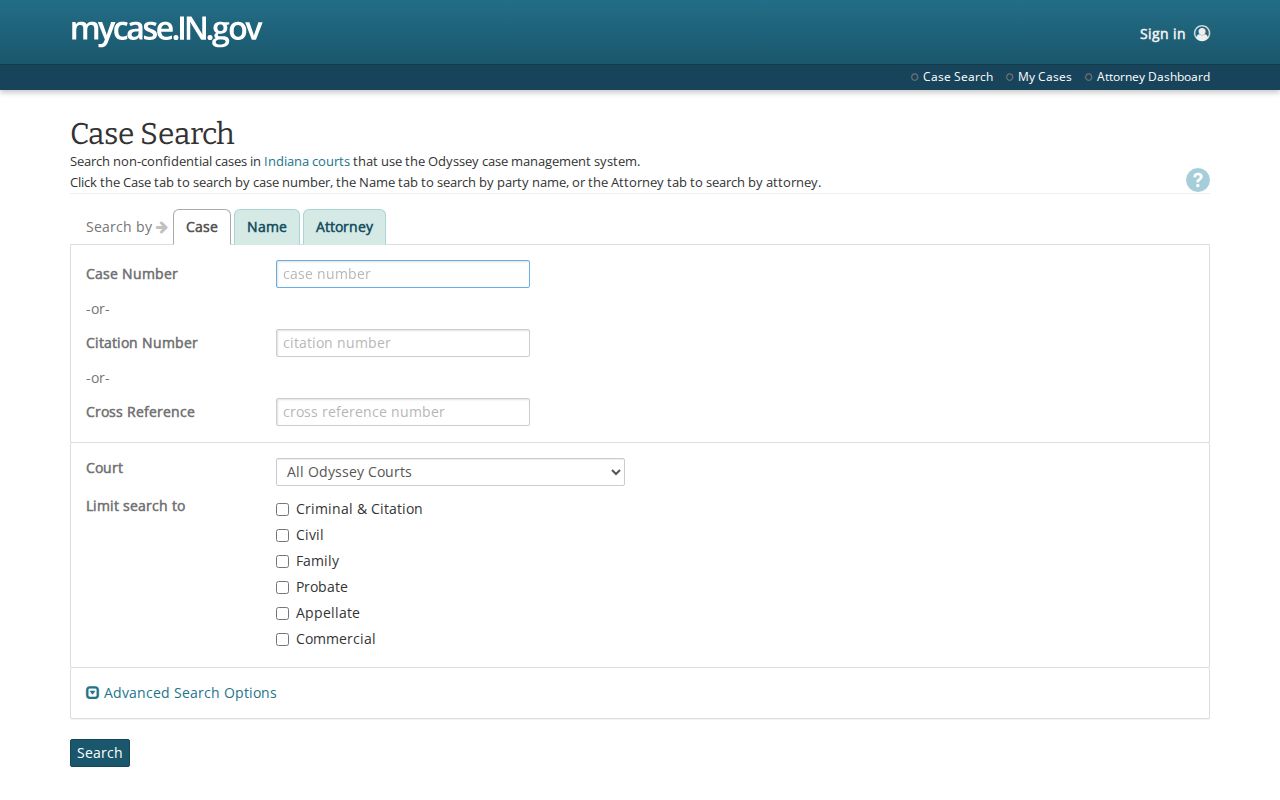
MyCase can find a case, yet public results may leave out documents and sealed records. Treat a hit as a lead. Call the Tippecanoe County Clerk or court to confirm whether a warrant is active, since a blank result proves nothing. For a relative, keep personal details off public forums; collect the case number and court, file an authorized request if needed, and let the Clerk decide what may be released.